
Blog
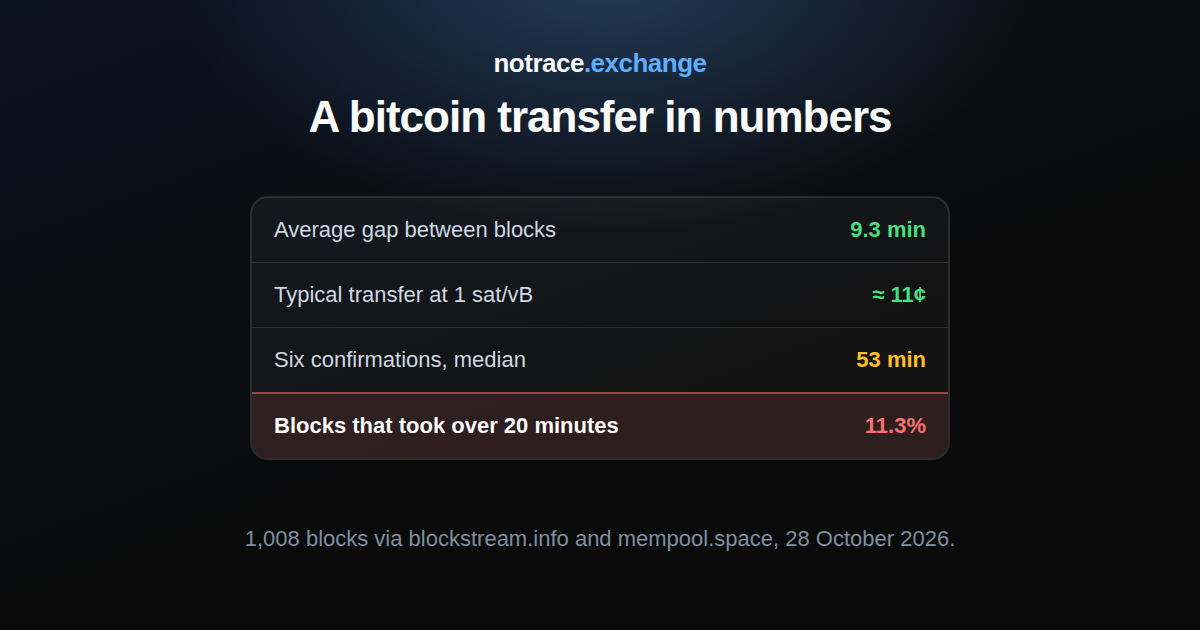
How long does a bitcoin transaction take?
October 28, 2026
About ten minutes to the first confirmation and close to an hour to six. What sets the time and why a transfer gets stuck, measured over 1,008 blocks.
Read more →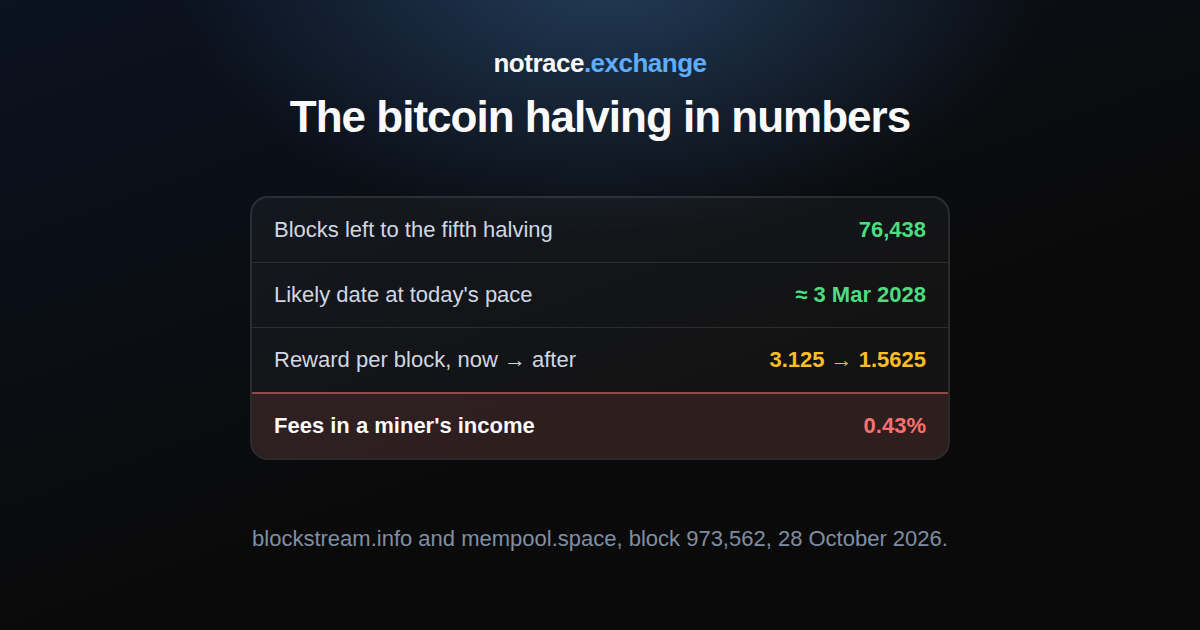
Bitcoin halving: what it is and when next
October 28, 2026
A halving cuts the new bitcoin per block in half every 210,000 blocks. When the next one comes and what it changes for miners, measured 28 October 2026.
Read more →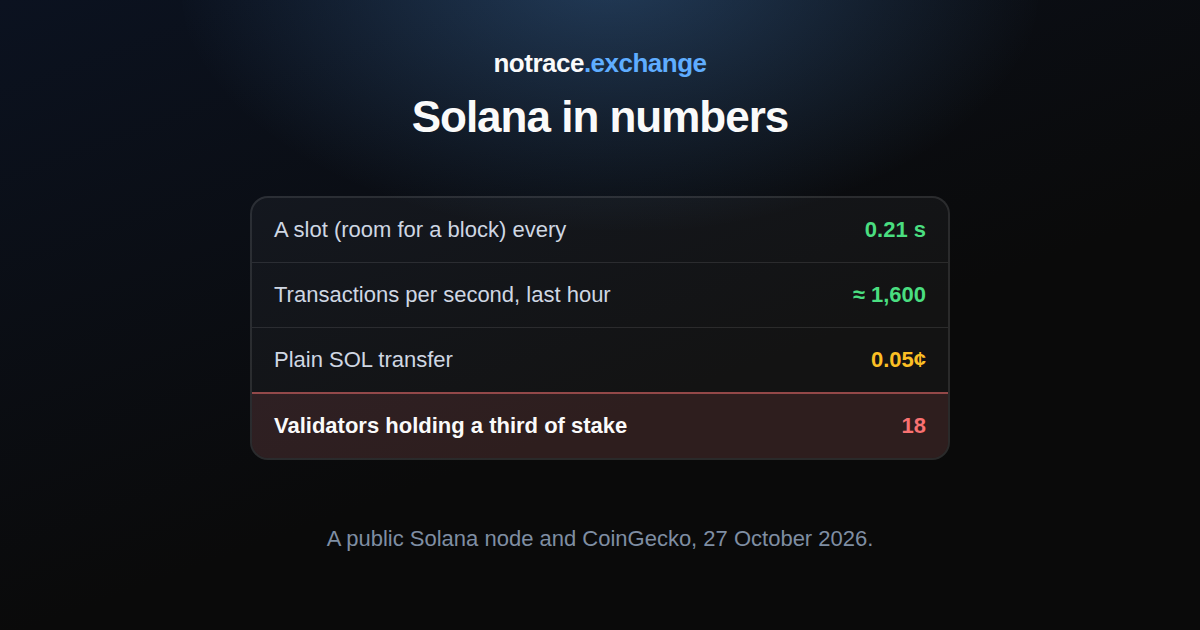
What is Solana? How it works and fees
October 27, 2026
Solana is a fast blockchain with smart contracts, and SOL is its coin. How the network works, what a transfer costs and who runs it, measured 27 October 2026.
Read more →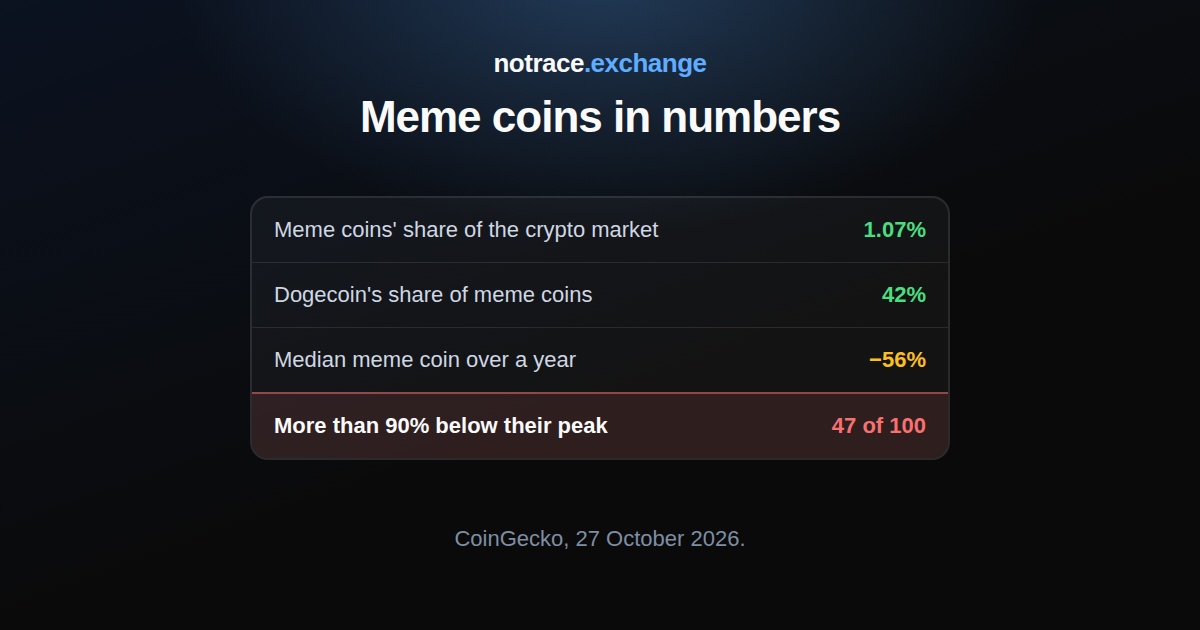
What are meme coins? A year in numbers
October 27, 2026
Meme coins are cryptocurrencies whose price rests on a joke and attention, not a product. Where they come from and how the 100 largest did in a year.
Read more →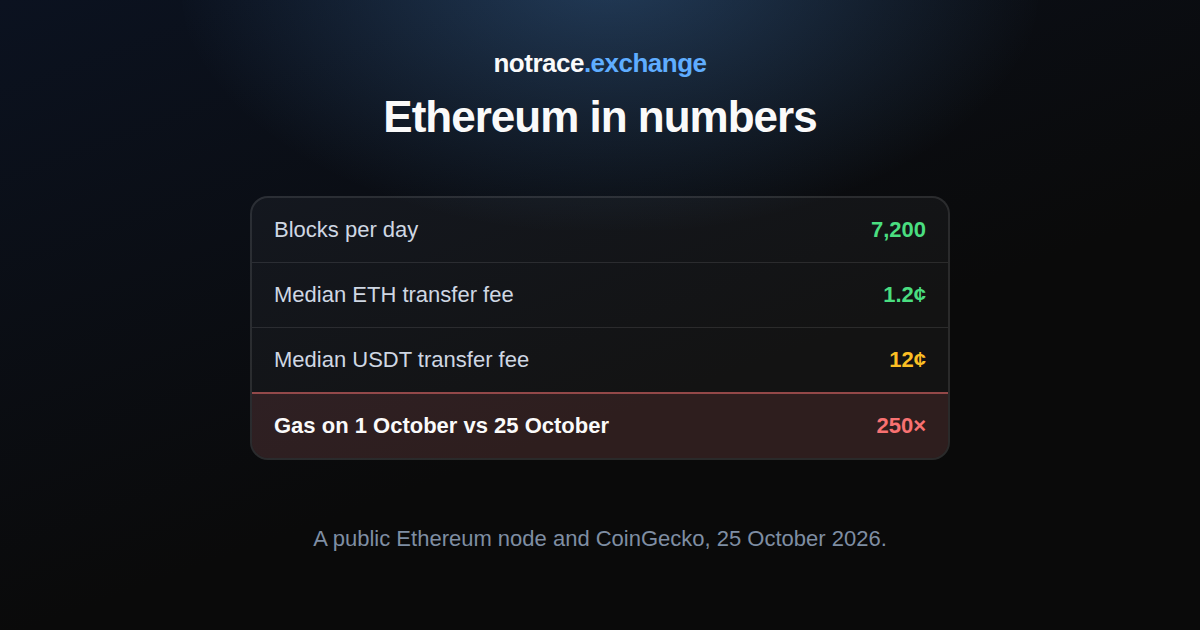
What is Ethereum? How it works and fees
October 25, 2026
Ethereum is a blockchain that runs smart contracts, with ether (ETH) as its coin. How it differs from bitcoin and what a transfer costs: 25 October 2026 data.
Read more →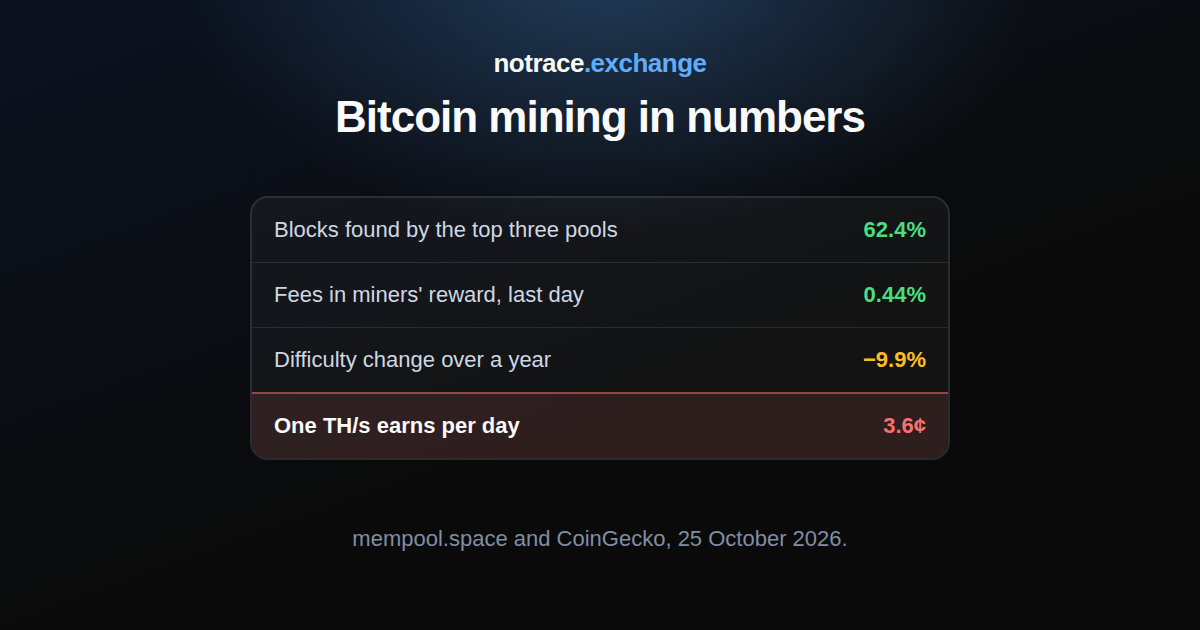
What is crypto mining? How it works
October 25, 2026
Crypto mining makes new blocks and coins with computing power. How it works, who finds bitcoin's blocks and what a terahash earns, measured 25 October 2026.
Read more →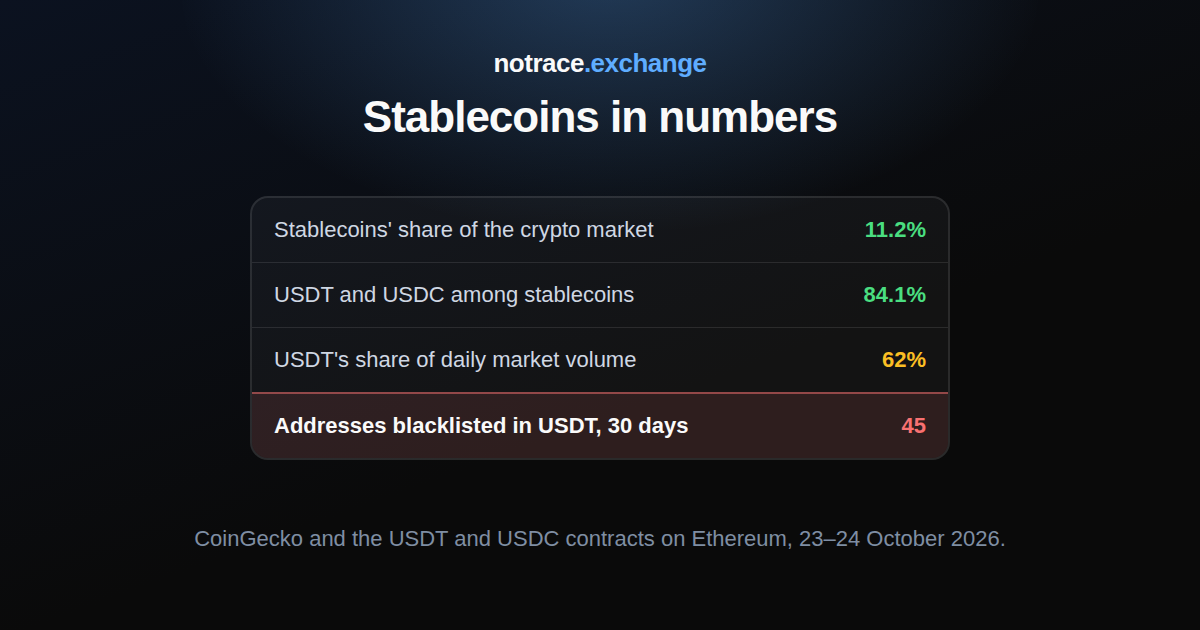
What is a stablecoin? Types and risks
October 24, 2026
A stablecoin is a cryptocurrency pegged to the dollar. The types, who can freeze them, and what our market snapshot of 24 October 2026 showed.
Read more →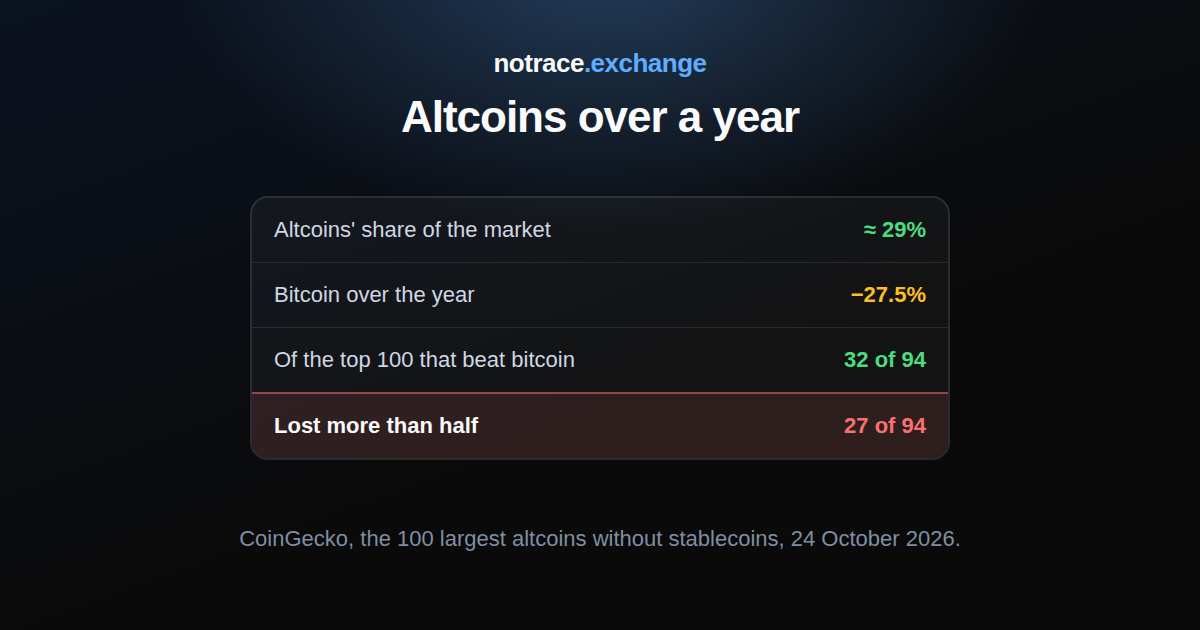
What are altcoins? Types and real data
October 24, 2026
Altcoins are all cryptocurrencies other than bitcoin. The main types, and what happened to the 100 largest in a year: our CoinGecko snapshot of 24 October 2026.
Read more →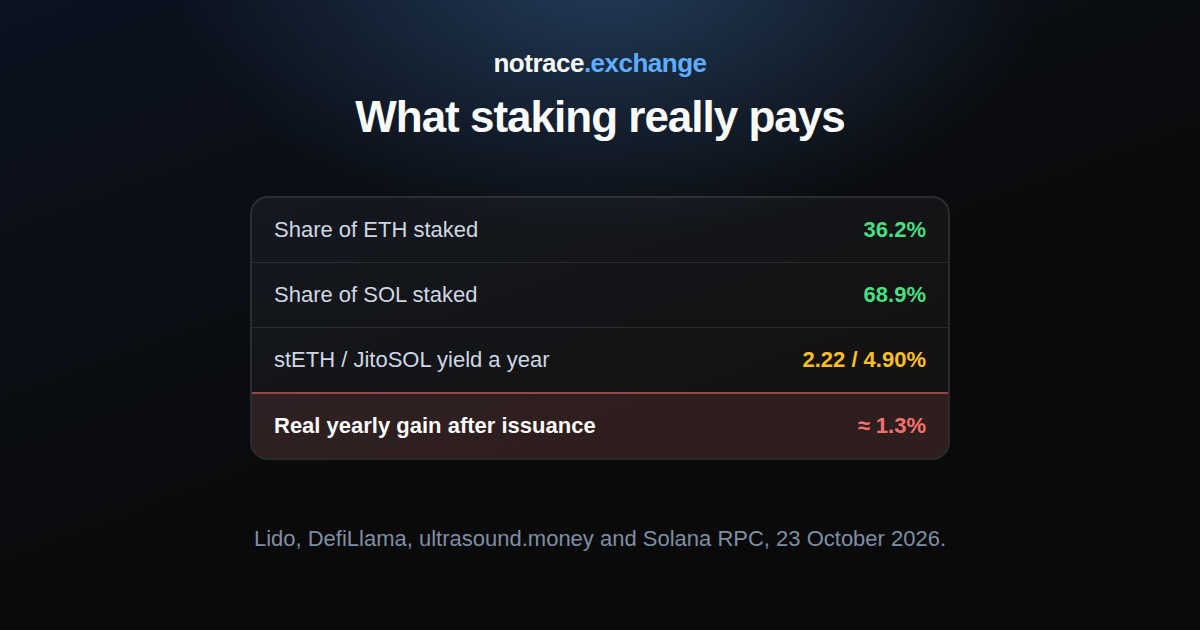
What is staking in crypto? Real yields
October 23, 2026
What is staking in crypto? Locking coins on a proof-of-stake network for a reward. What ETH and SOL staking really pays once new coin issuance is counted.
Read more →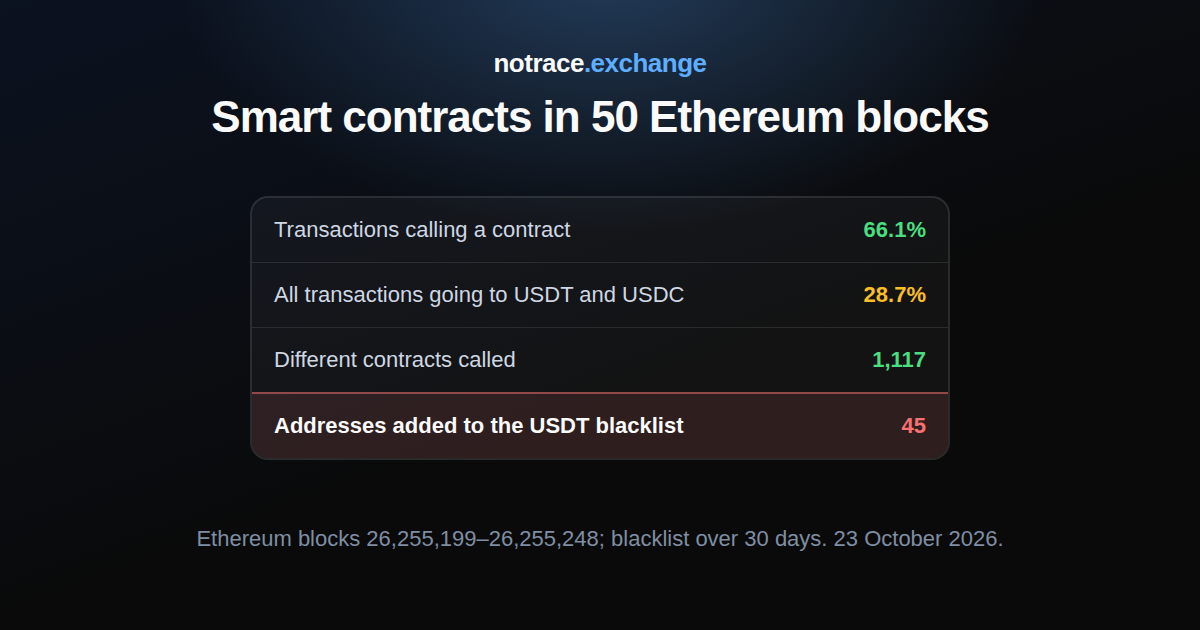
What is a smart contract? How it works
October 23, 2026
A smart contract is a blockchain program that runs by itself, the same for everyone. We read 50 Ethereum blocks and the USDT and USDC contracts.
Read more →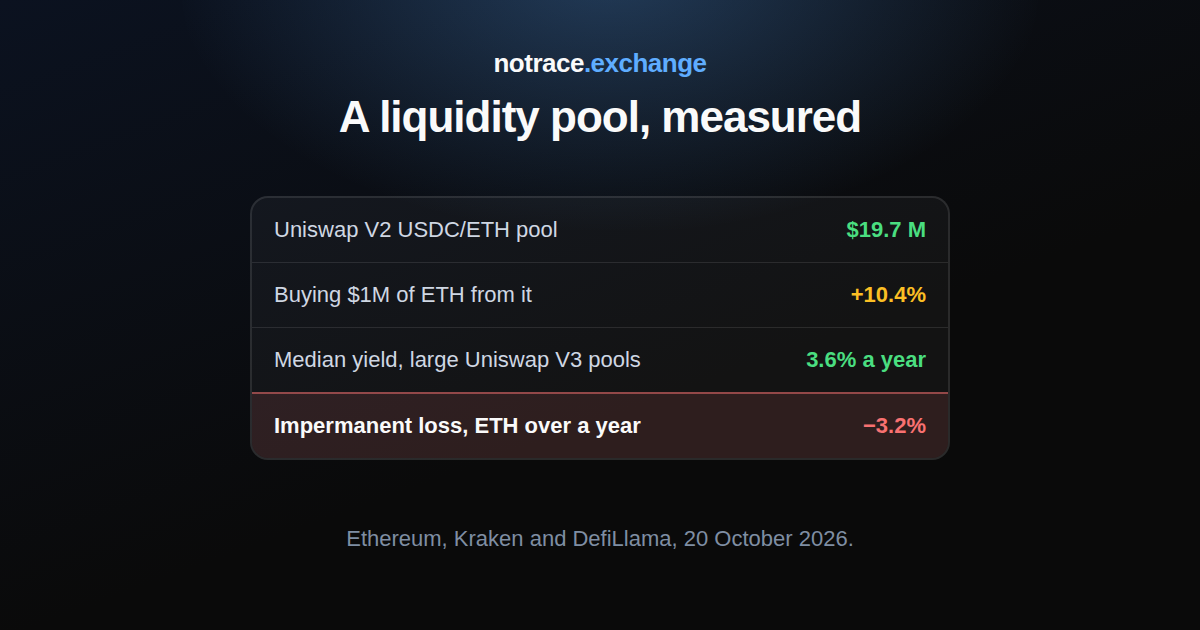
What is a liquidity pool in crypto
October 20, 2026
A liquidity pool is a smart contract holding two tokens that a DEX trades against. How it sets the price, what it pays, and where the money is lost.
Read more →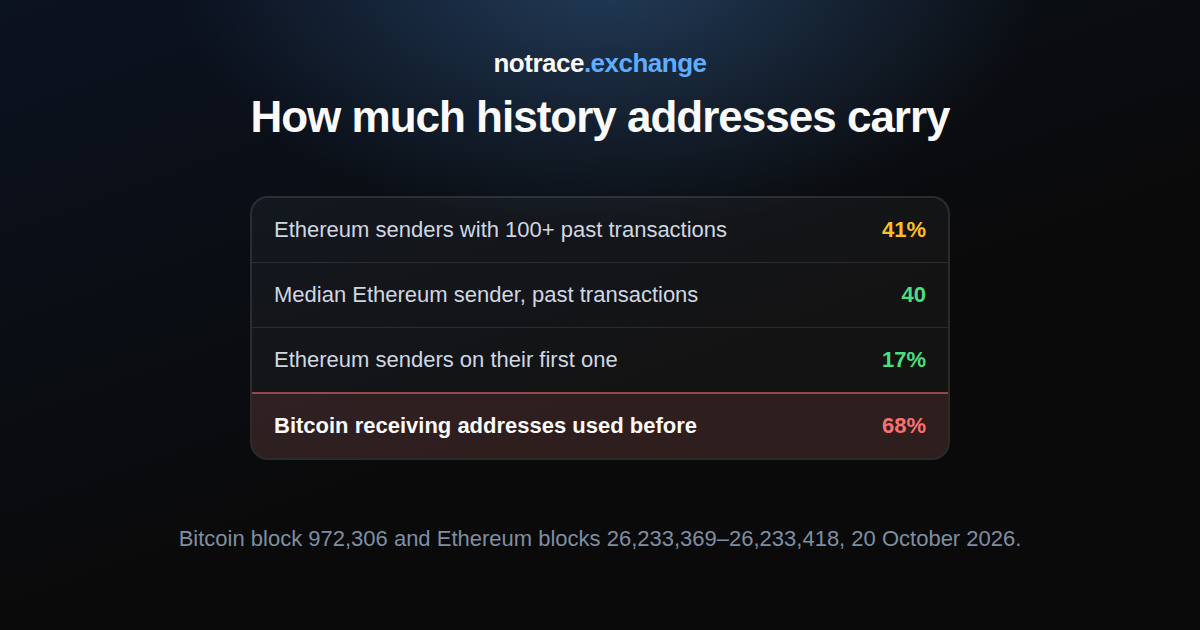
Is crypto anonymous? What others can see
October 20, 2026
Is crypto anonymous? Mostly not: it is pseudonymous. What each network shows, how fast addresses gather history, and which coins hide what.
Read more →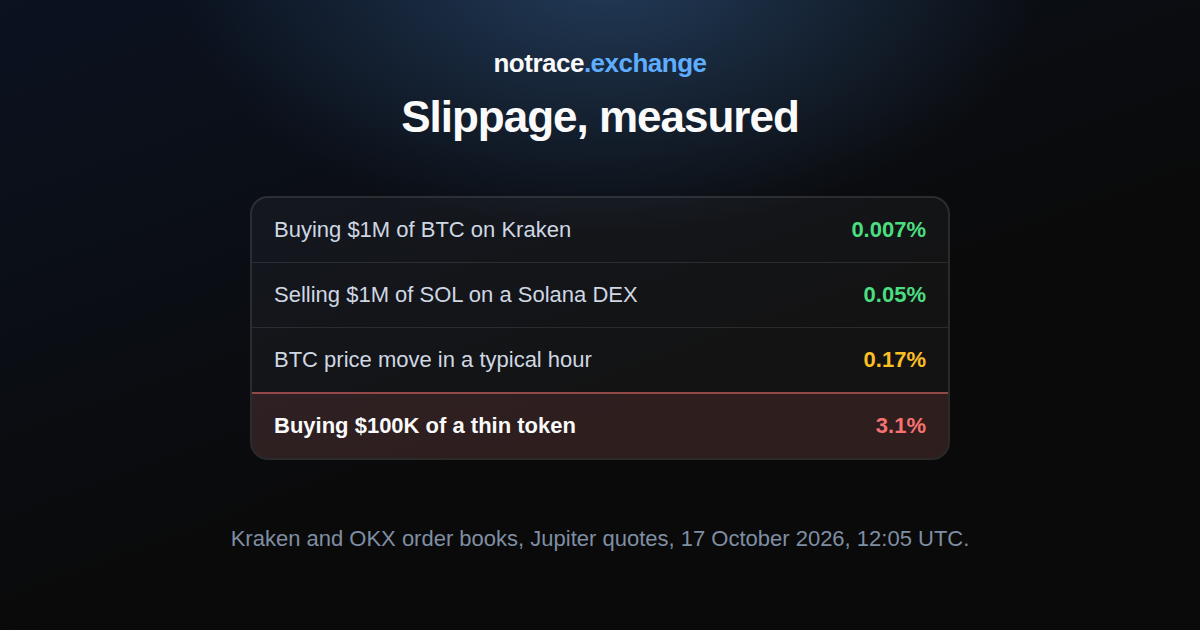
What is slippage in crypto, in numbers
October 17, 2026
What is slippage in crypto? The gap between the price you see and the price you get. Measured on order books and a DEX, plus how far prices move in an hour.
Read more →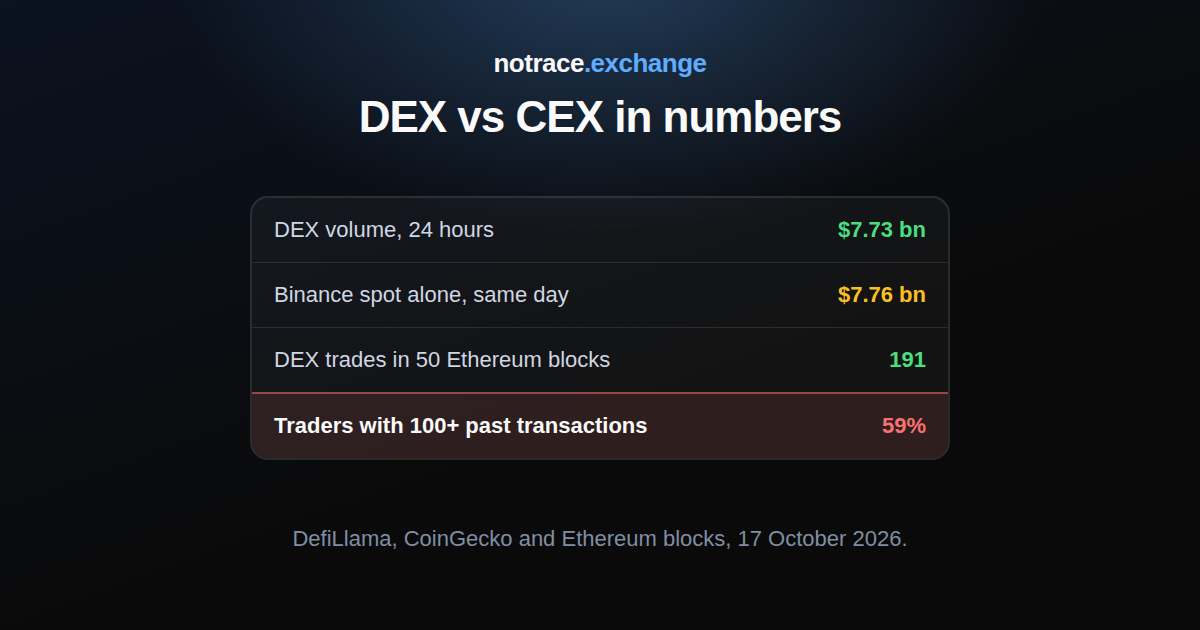
What is a DEX? DEX vs CEX explained
October 17, 2026
What is a DEX? A crypto exchange run by a smart contract, with no account and no company holding your coins. How it differs from a CEX, and what a trade shows.
Read more →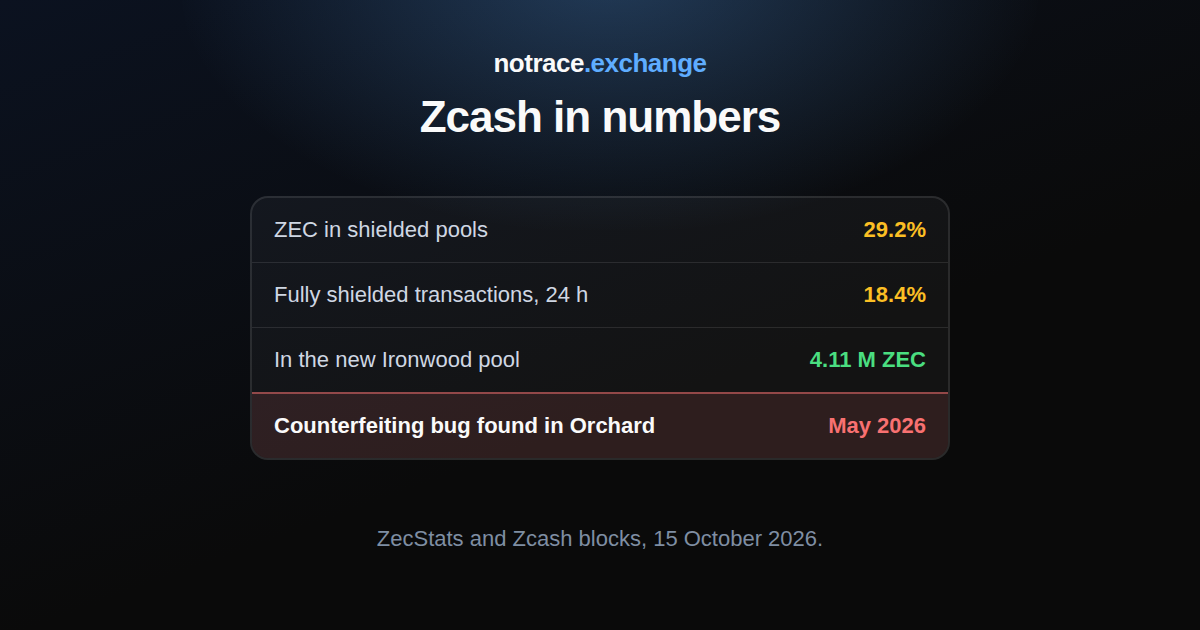
What is Zcash and how private is it
October 15, 2026
What is Zcash: a coin that can hide sender, receiver and amount, if users choose to. How much ZEC is shielded, a day of transactions, and the 2026 pool bug.
Read more →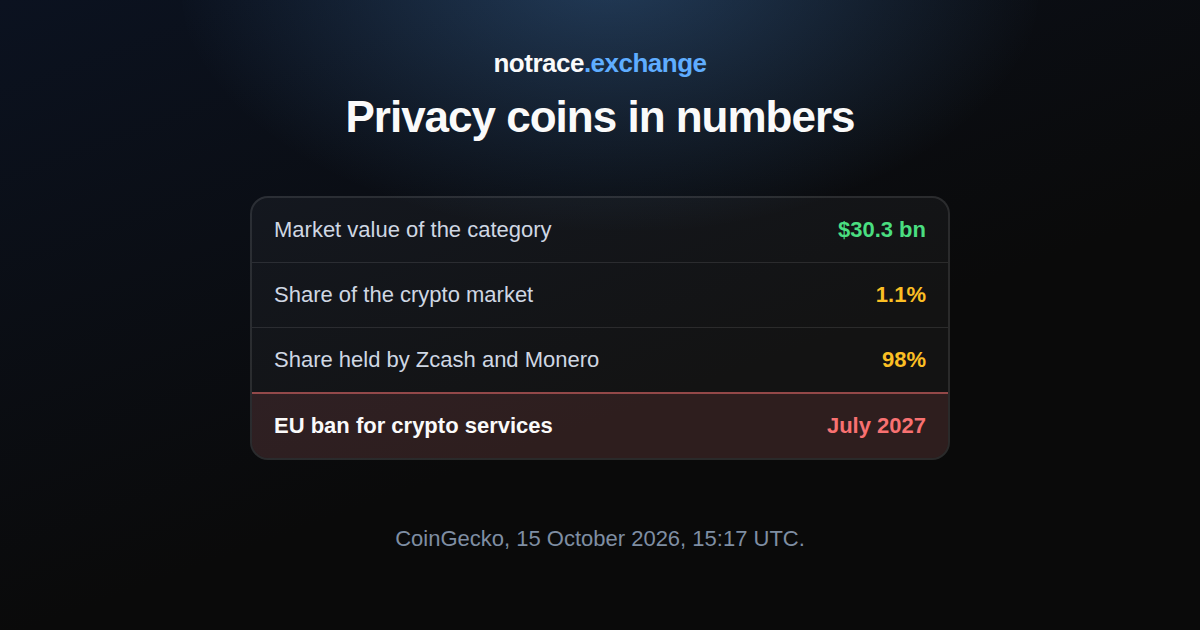
What are privacy coins and how they work
October 15, 2026
What are privacy coins: cryptocurrencies whose own chain hides the sender, the receiver or the amount. How they do it, what they are worth and what they miss.
Read more →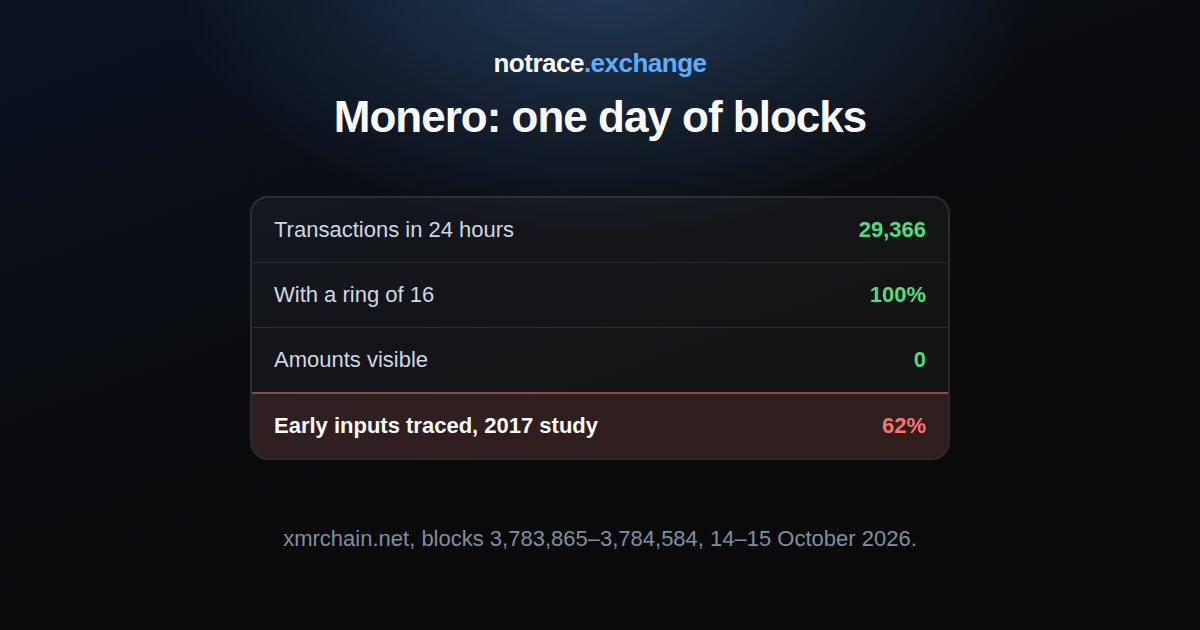
Is Monero traceable? What the chain hides
October 15, 2026
Is Monero traceable? Its chain hides amounts, receivers and the real sender among 16. A day of blocks, and what still links people to their coins.
Read more →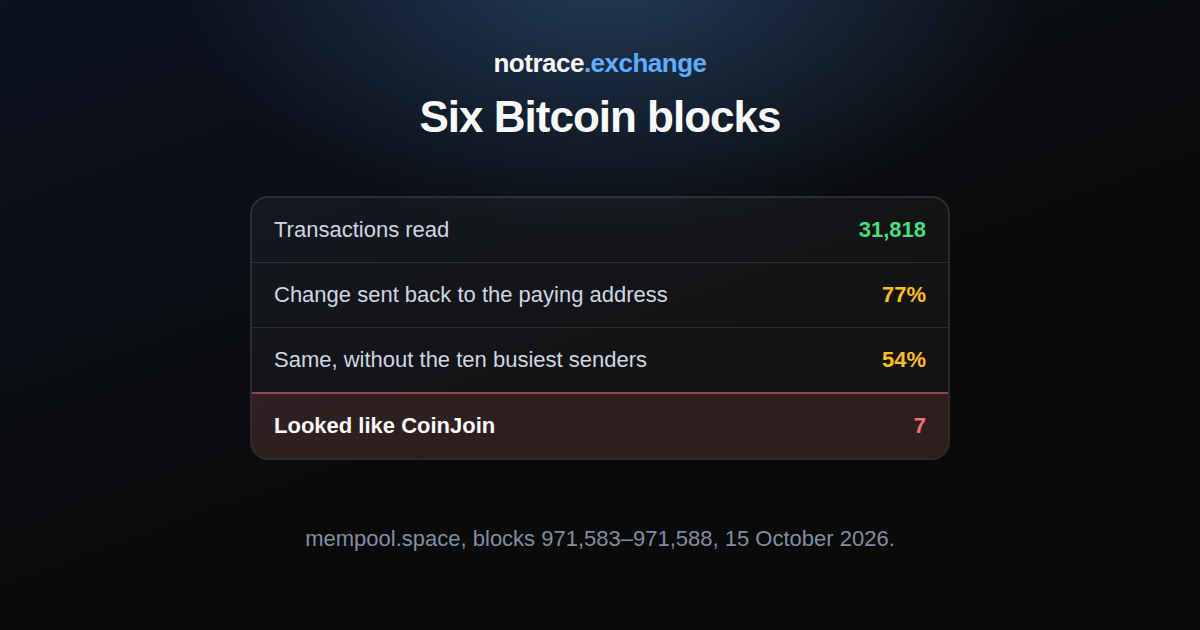
How to send crypto anonymously
October 15, 2026
How to send crypto anonymously: a transfer on a public chain is never hidden, but the links back to you can be cut. What gives senders away, and what helps.
Read more →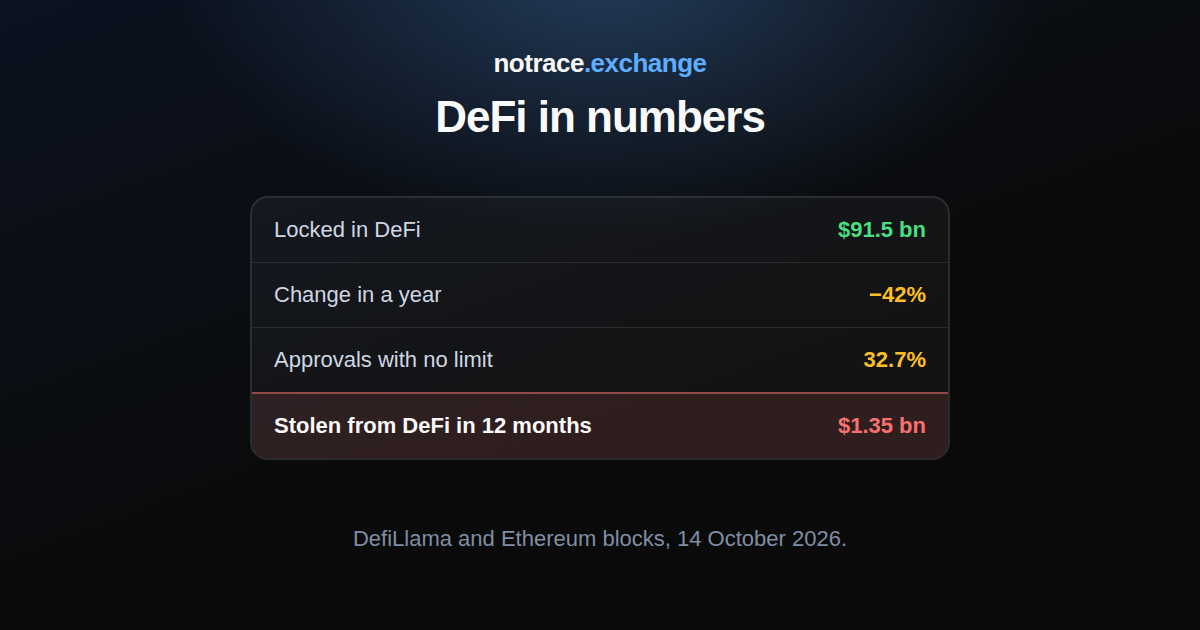
What is DeFi and how does it work
October 14, 2026
What is DeFi: finance run by smart contracts, with no company in between. How much is locked in it, what an approval hands over, and how often it breaks.
Read more →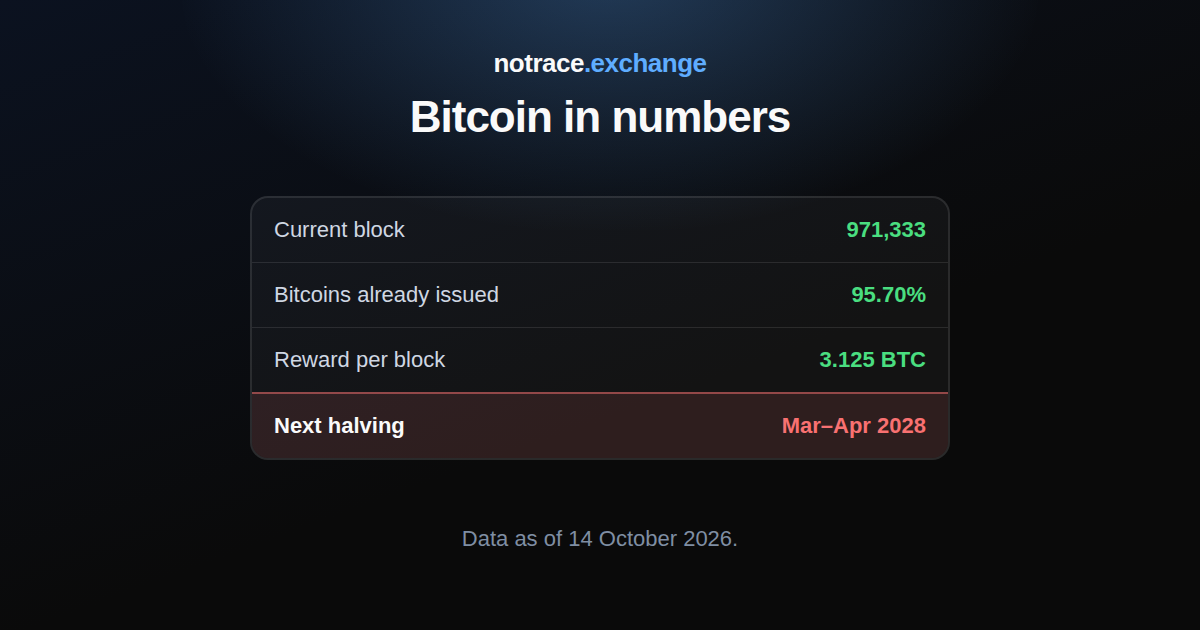
What is Bitcoin and how does it work
October 14, 2026
What is Bitcoin: a network without a bank that adds a block about every ten minutes. How many coins exist, when the next halving lands, what a transfer costs.
Read more →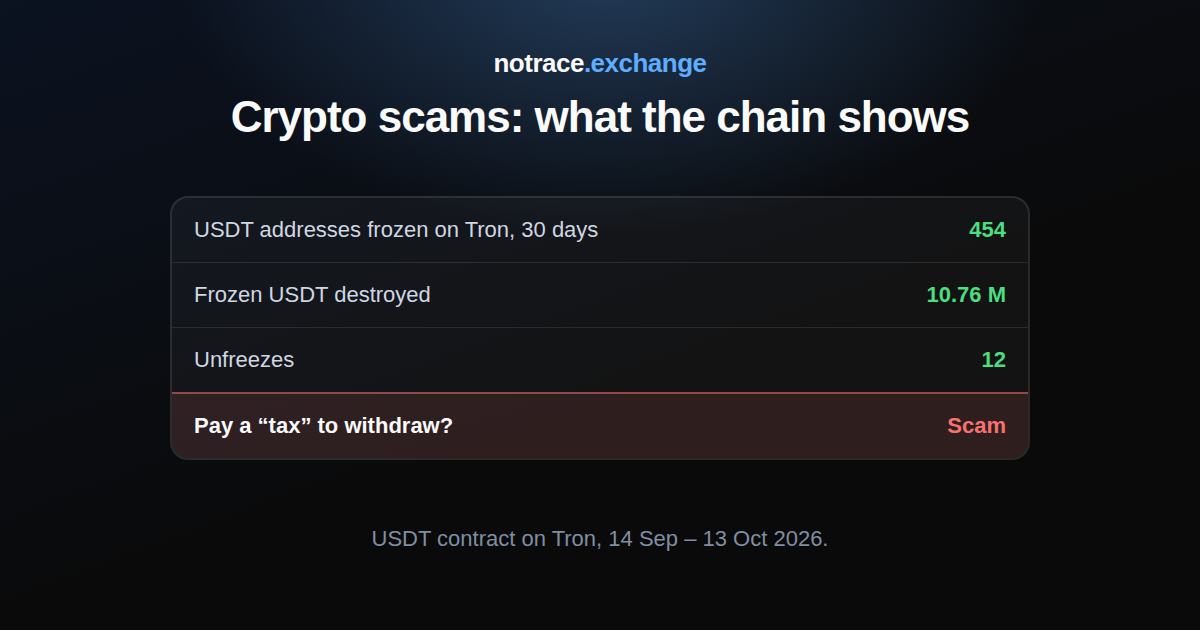
Crypto scams: how to check them on-chain
October 14, 2026
Crypto scams often ask for USDT. Four common schemes, the pay-a-tax-to-withdraw trick, and how to check a TXID and the USDT blacklist yourself.
Read more →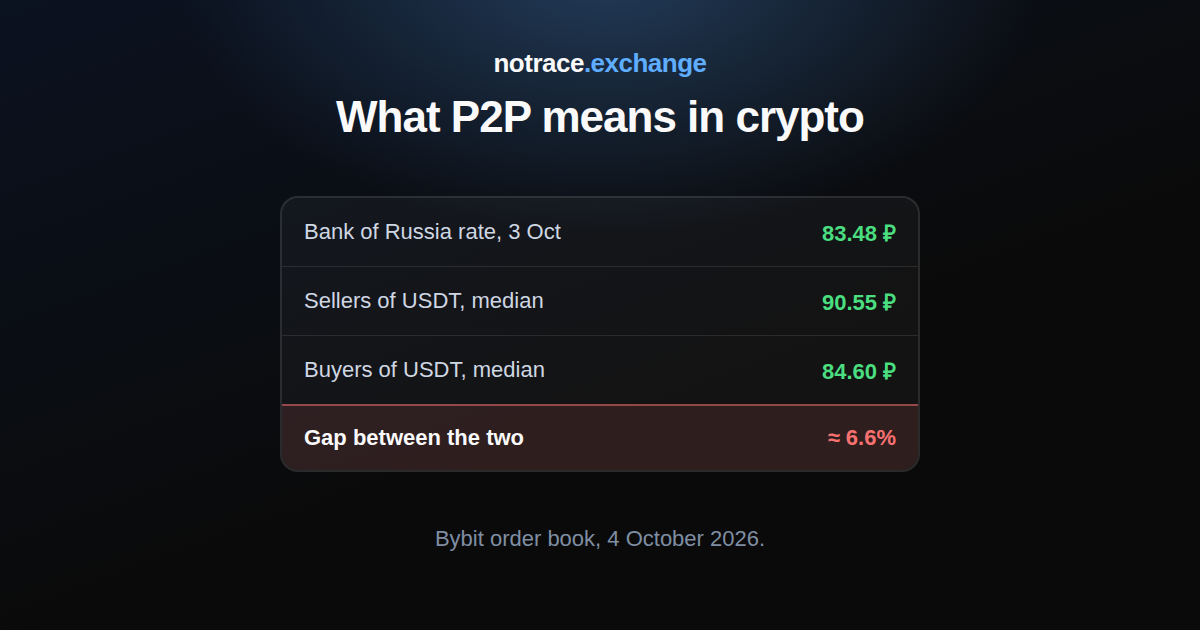
What is P2P in crypto and how it works
October 4, 2026
P2P in crypto is a trade with a person while the platform holds the coins as a deposit. How it works, who sets the price and the risks. Data of 4 October 2026.
Read more →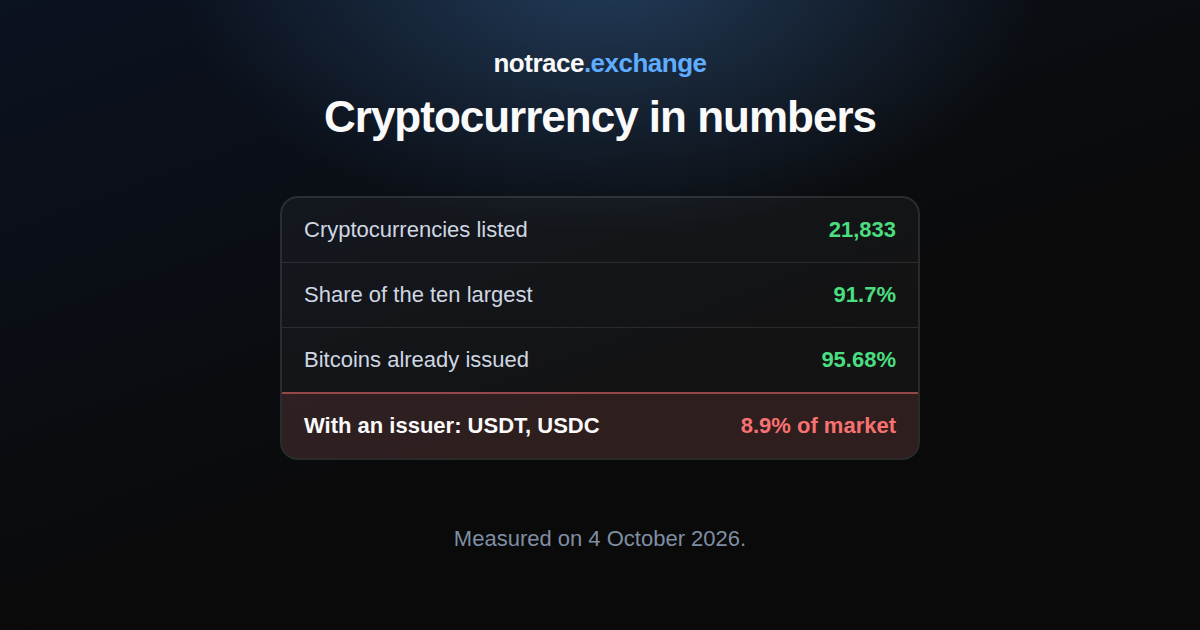
What is cryptocurrency, in plain terms
October 4, 2026
Cryptocurrency is a ledger record that only the key holder can change. Who issues it, what anyone can see, and our market snapshot of 4 October 2026.
Read more →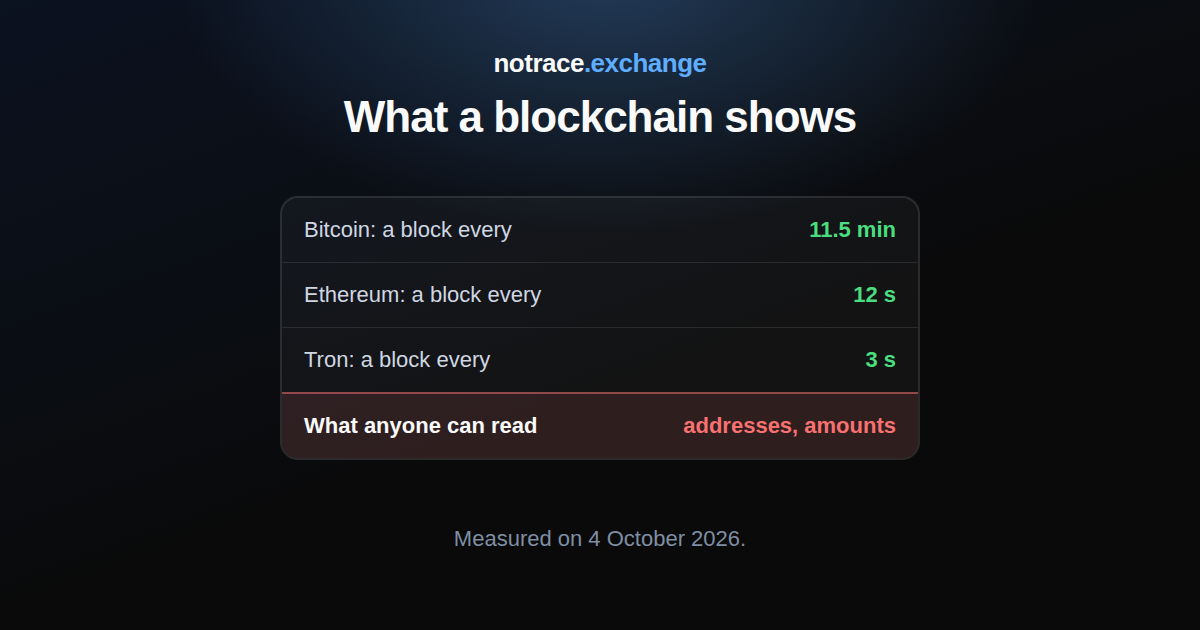
What is blockchain and what it shows
October 4, 2026
A blockchain is a shared ledger anyone can read. Three real transfers from 4 October 2026, on Bitcoin, Ethereum and Tron, and what each one reveals.
Read more →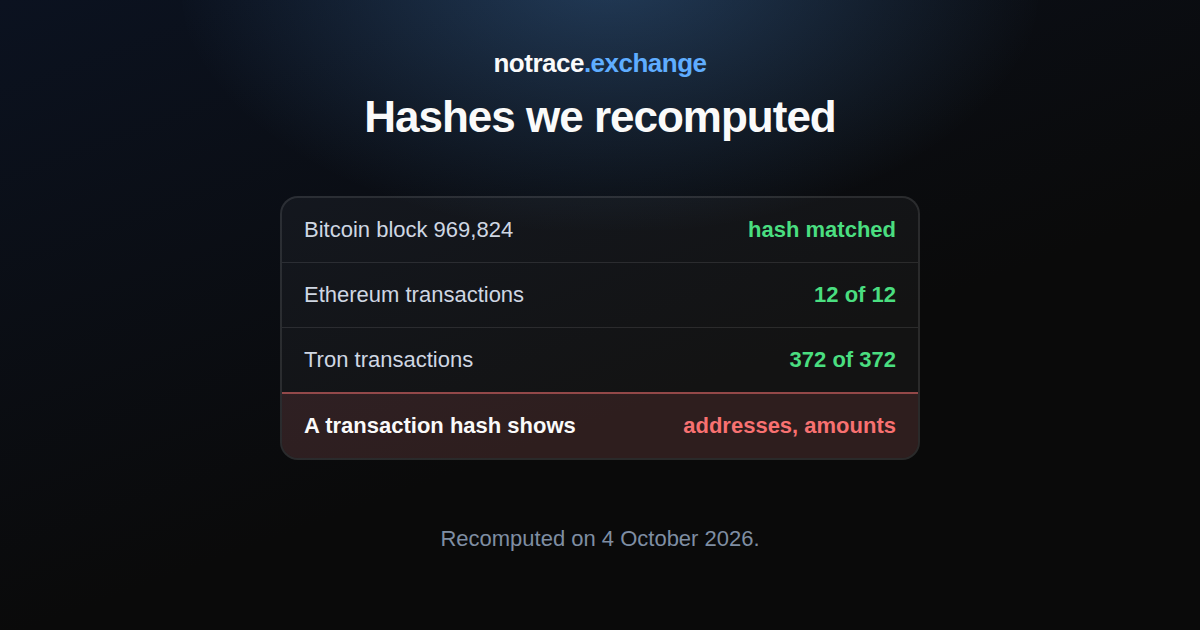
What is a hash in blockchain and crypto
October 4, 2026
A hash is a short, fixed-length fingerprint of data. On a real Bitcoin block from 4 October 2026 we show how it is computed and what a transaction hash reveals.
Read more →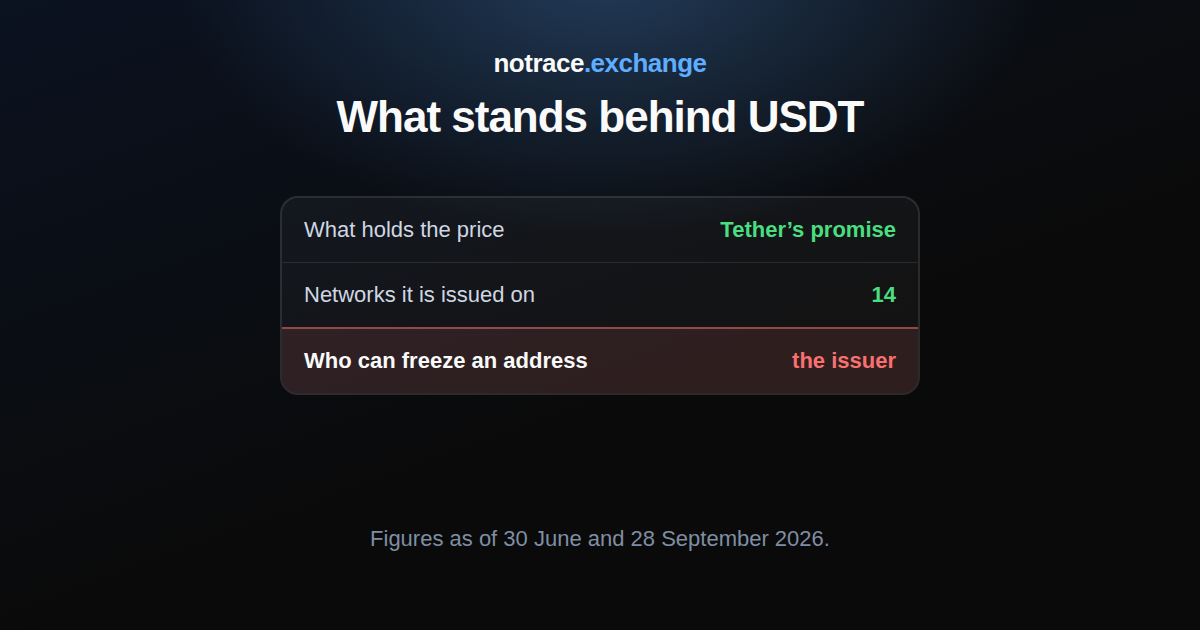
What is USDT and who controls it
October 1, 2026
USDT is a token from Tether, pegged to the dollar and issued on 14 networks. The issuer can freeze any address. Reserve and freeze figures for 2026.
Read more →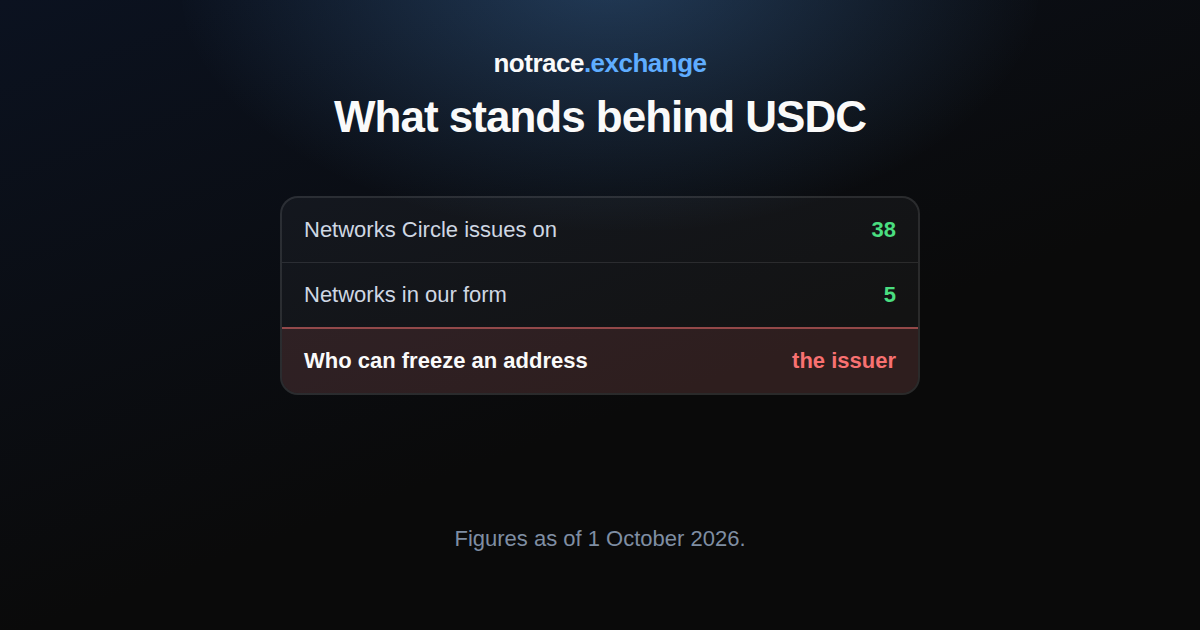
What is USDC and who can freeze it
October 1, 2026
USDC is a dollar token issued by Circle on 38 networks, and Circle can freeze any address. Reserves, supply and freeze cases as of 1 October 2026.
Read more →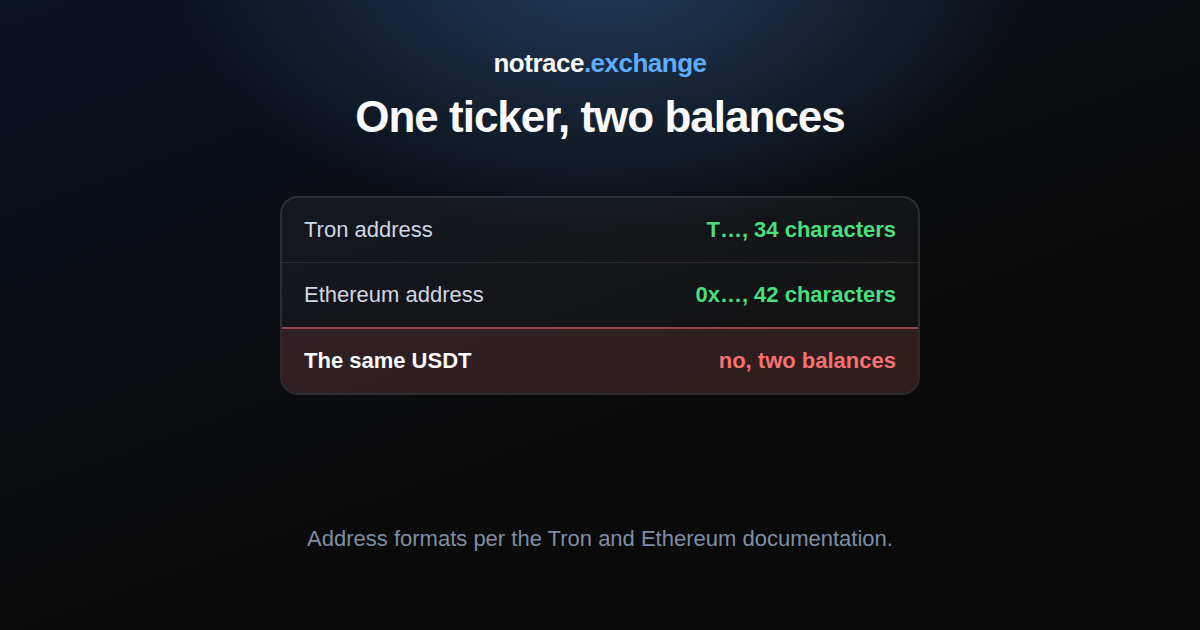
TRC20 vs ERC20: which USDT network
October 1, 2026
TRC-20 and ERC-20 are token standards on Tron and Ethereum; USDT is a separate balance on each. Address formats and what a transfer cost on 1 October 2026.
Read more →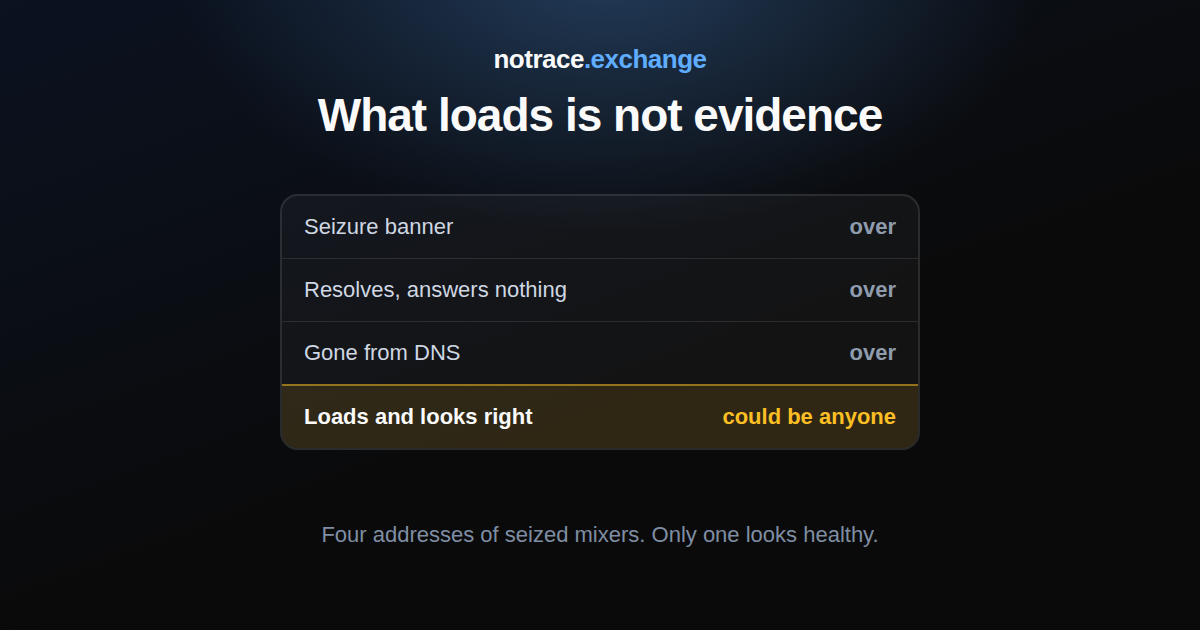
Seized mixers: ChipMixer, CryptoMixer
September 30, 2026
What is actually at the addresses of the seized mixers today, measured on 30 September 2026 — and what the seizures proved about the promise to keep no logs.
Read more →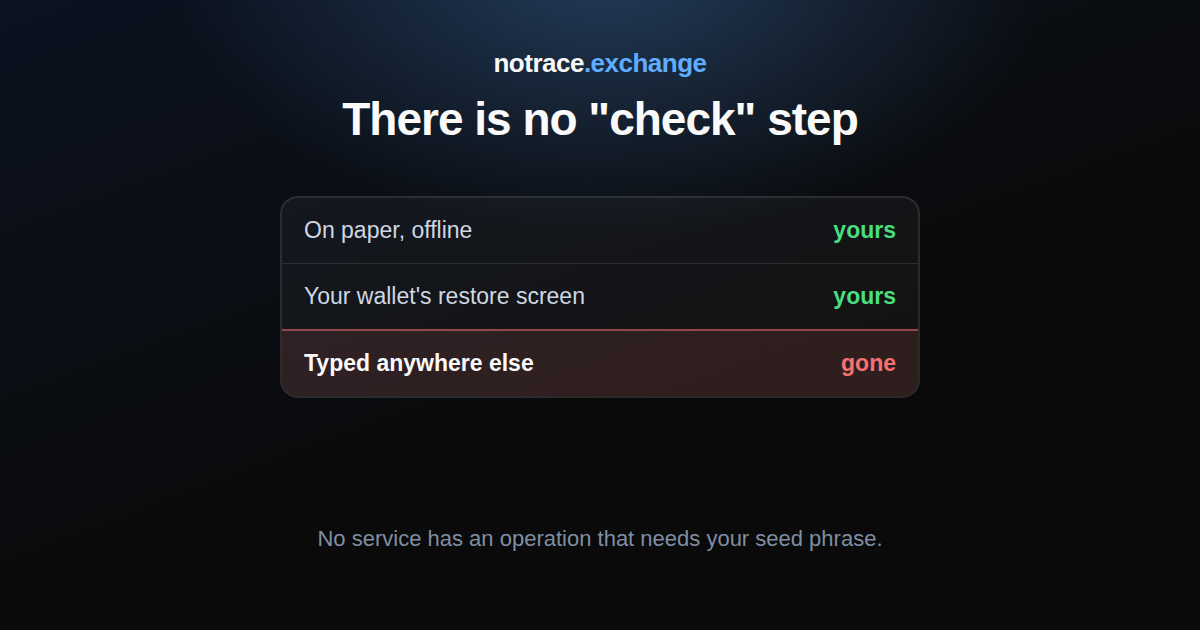
Seed phrase safety: who asks for it
September 30, 2026
A seed phrase has no "check" operation. Any verification requires typing it in, and typing it in is the transfer of everything the wallet holds.
Read more →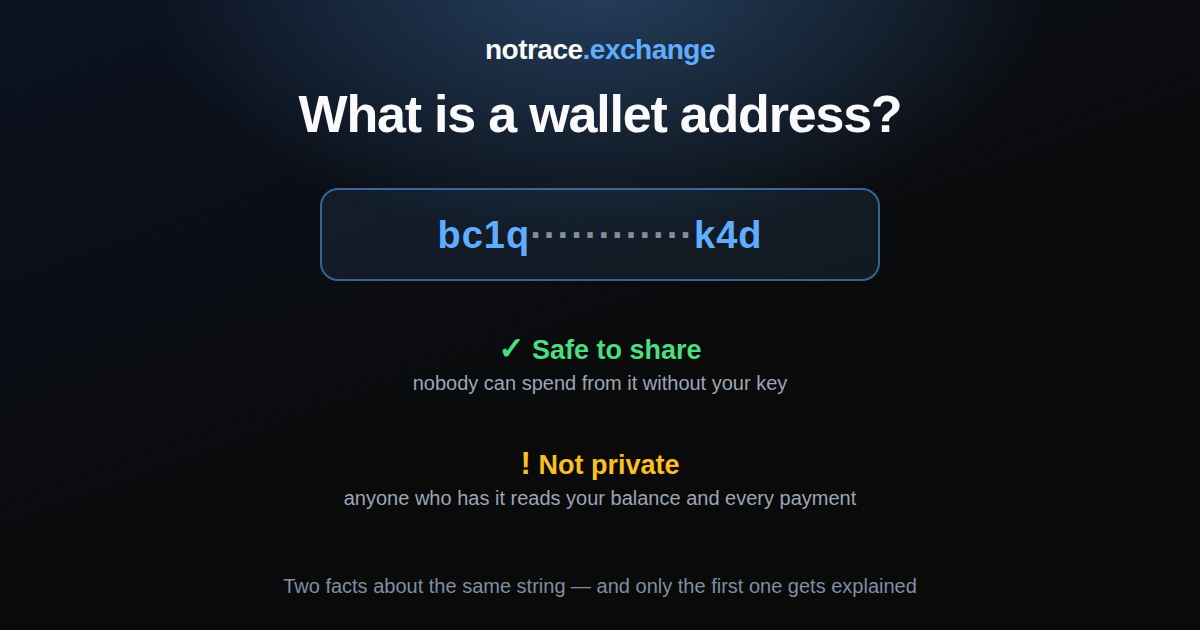
What is a wallet address and who sees it
September 29, 2026
What a wallet address is, where to find yours, and why it is safe to share but not private: anyone who has it can read your balance and your whole history.
Read more →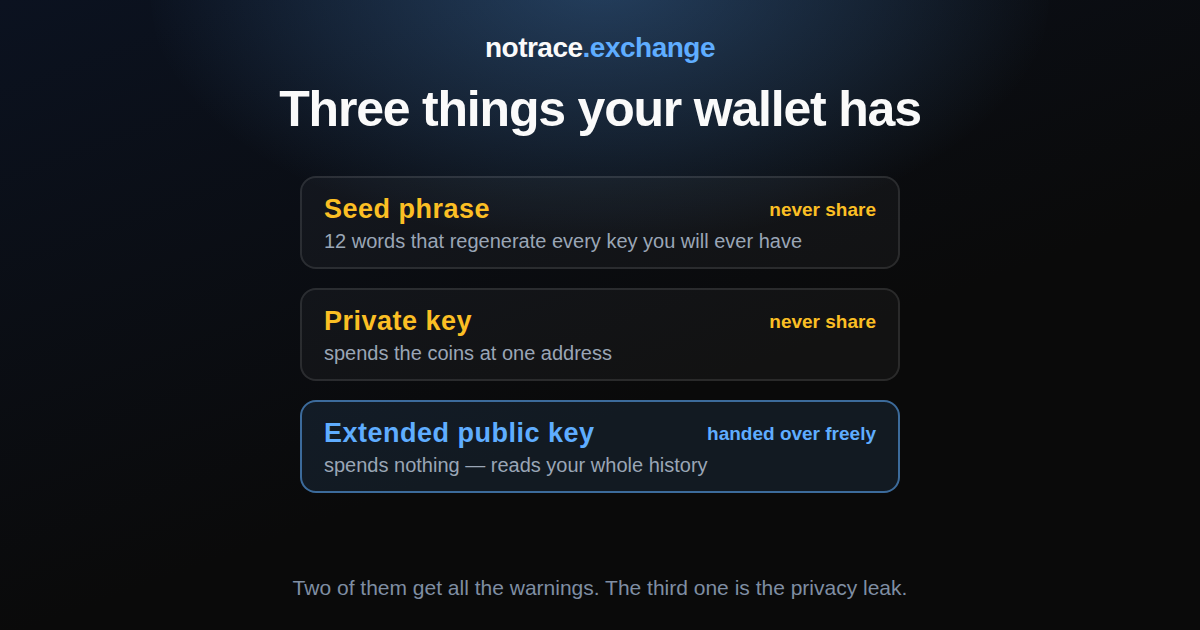
Seed phrase vs private key, and xpub
September 29, 2026
A private key spends one address, a seed phrase regenerates all of them — and the third thing your wallet holds spends nothing but reads your entire history.
Read more →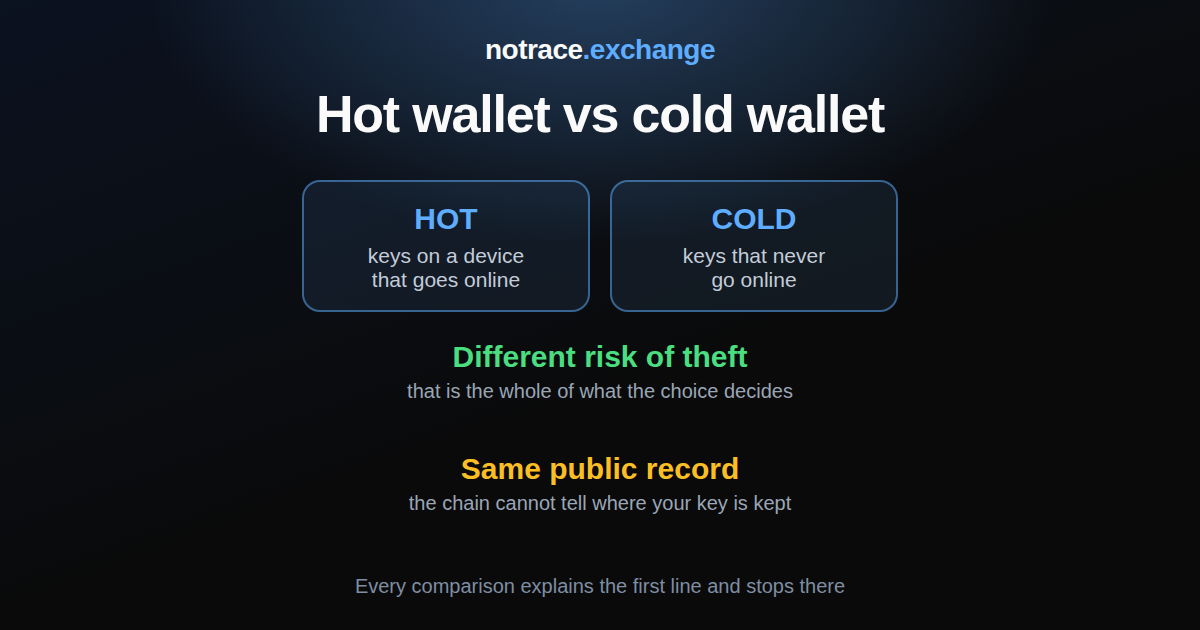
Hot wallet vs cold wallet: who can see
September 29, 2026
A hot wallet keeps your keys on a device that goes online, a cold wallet does not. That decides who can steal from you — and nothing about who can watch you.
Read more →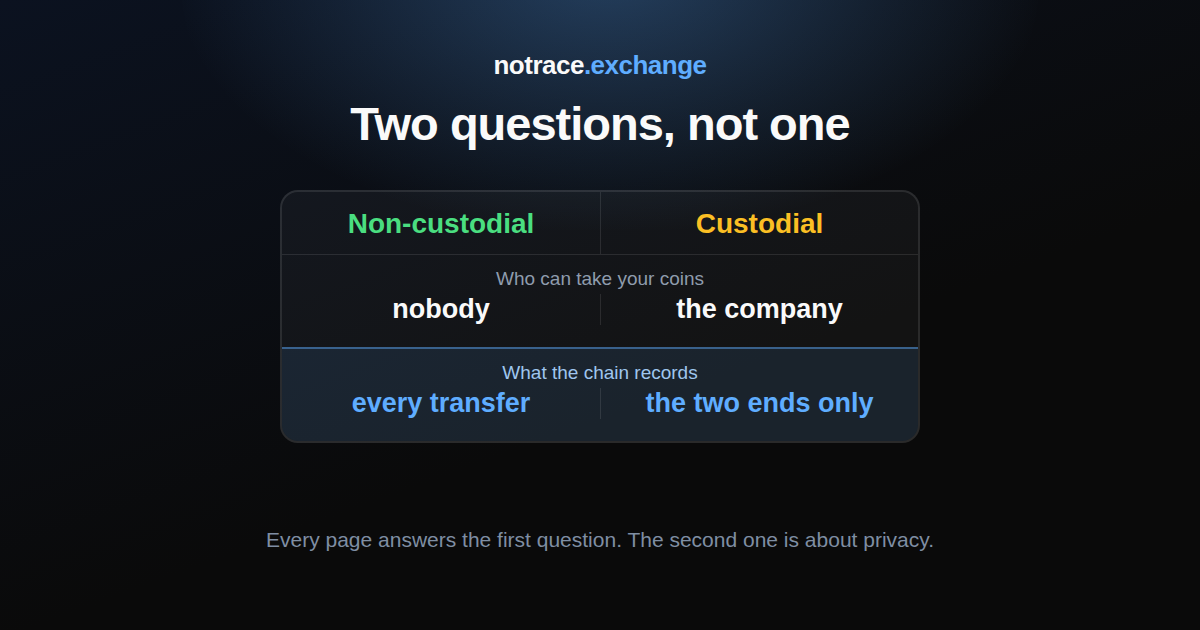
Custodial vs non-custodial, and privacy
September 29, 2026
A custodial wallet means somebody else can take your coins. It also means your transfers stop being blockchain records, and that half is never explained.
Read more →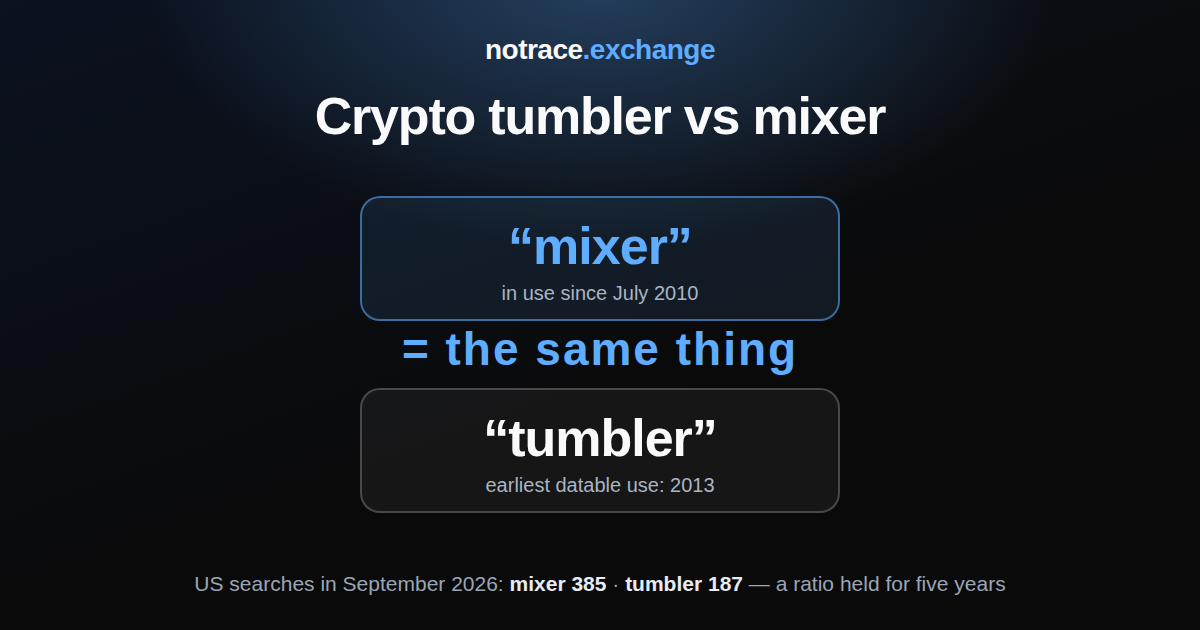
Crypto tumbler vs mixer: any difference?
September 29, 2026
Crypto tumbler vs mixer: the two words mean the same thing. What prosecutors and regulators call it, which word came first, and what really differs.
Read more →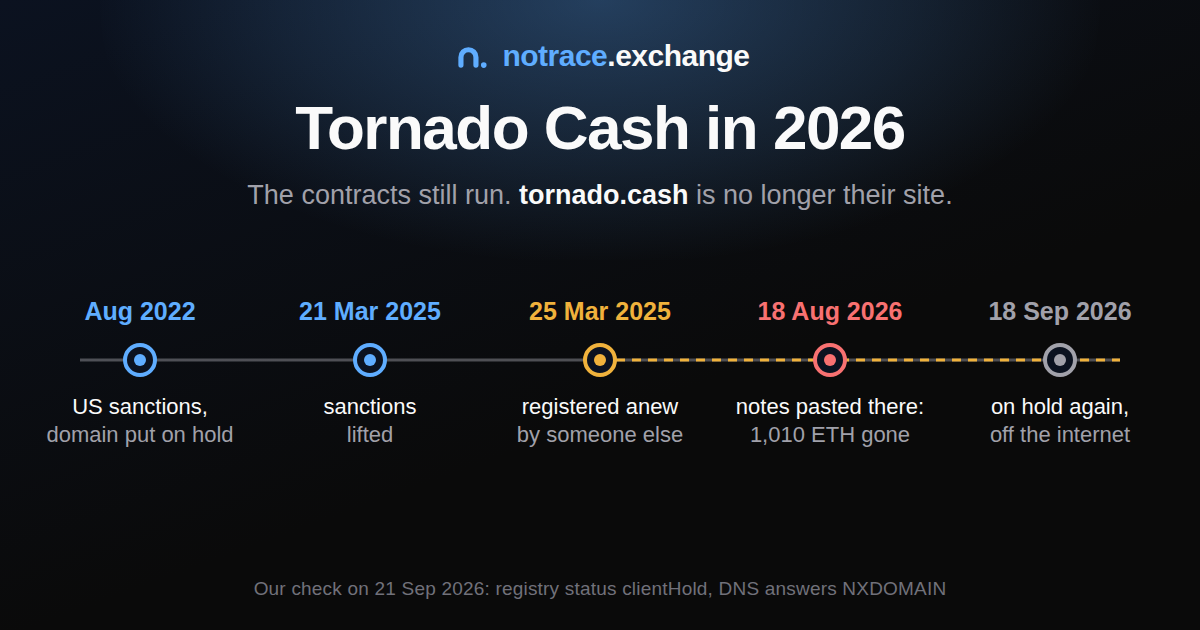
Tornado Cash in 2026: status and phishing
September 21, 2026
Is Tornado Cash still working in 2026? Its contracts run and US sanctions are gone, but the tornado.cash domain no longer belongs to the project.
Read more →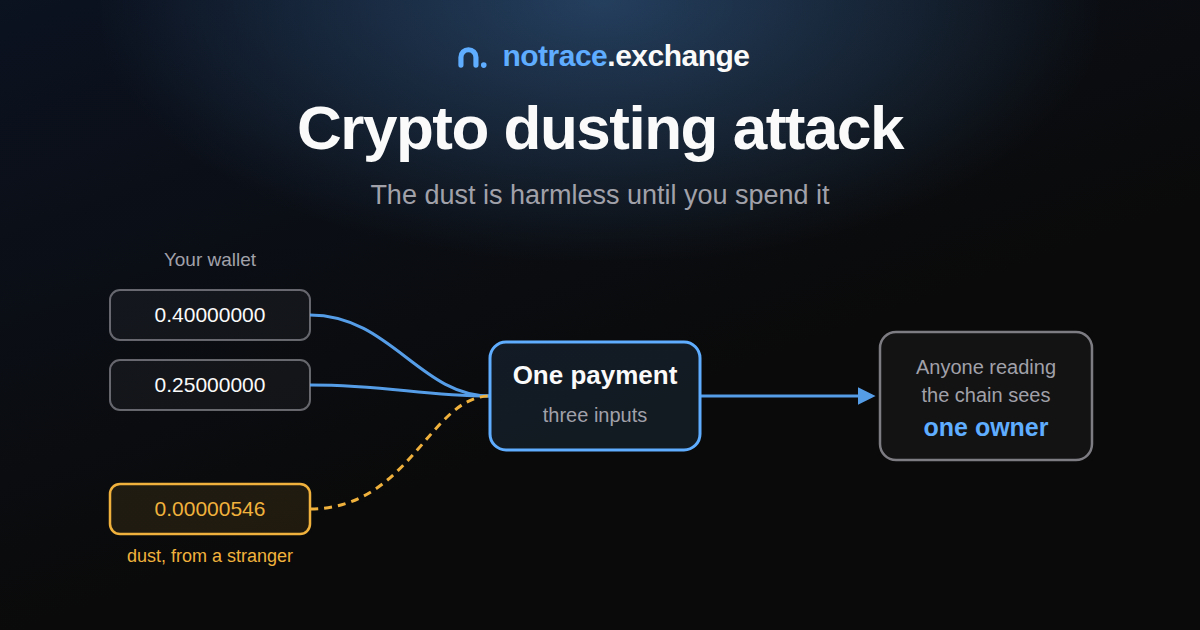
Crypto dusting attack: what to do
September 20, 2026
A crypto dusting attack sends coins you never asked for. What the dust can reveal, why spending it is the only mistake, and what to do about it.
Read more →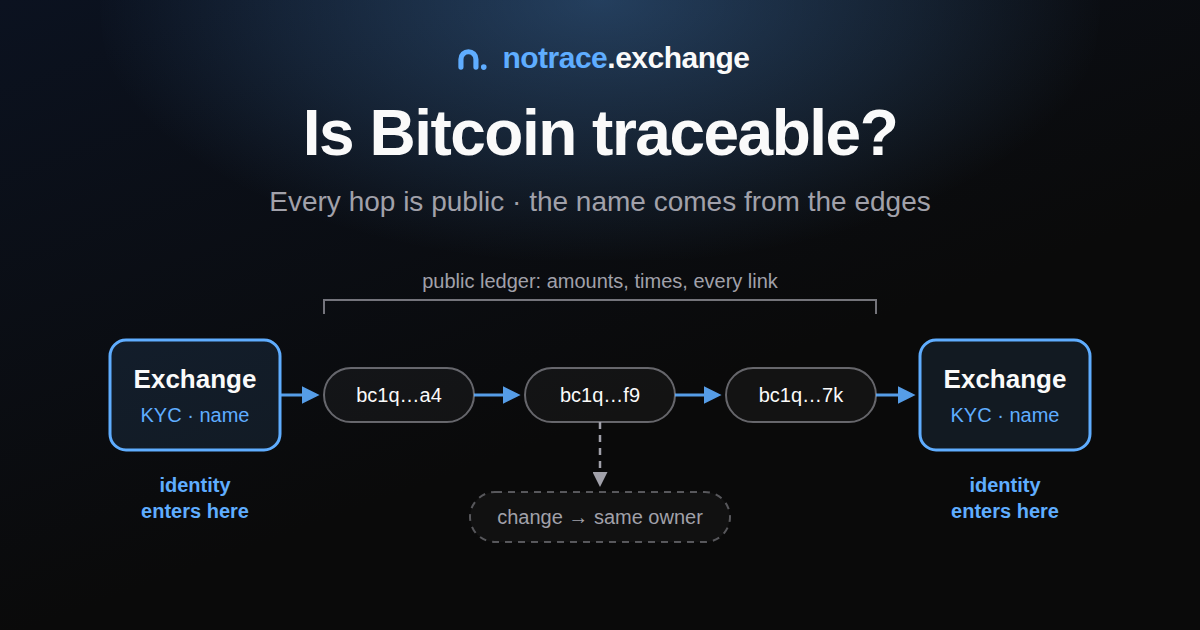
Is Bitcoin traceable? How tracing works
September 16, 2026
Is Bitcoin traceable? Yes: every transaction is public. How chain analysis groups addresses, where a name gets attached and what the FBI and IRS have done.
Read more →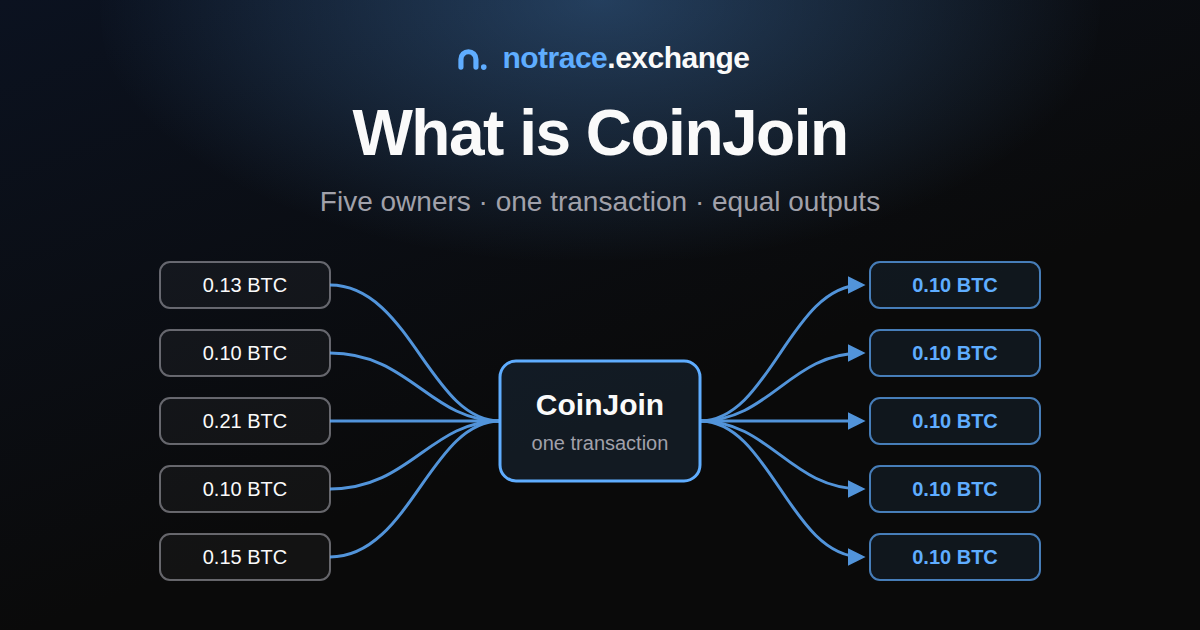
What is CoinJoin and how does it work
September 15, 2026
What CoinJoin is, how one shared Bitcoin transaction blurs who paid whom, where it still runs in 2026 and what it leaves visible.
Read more →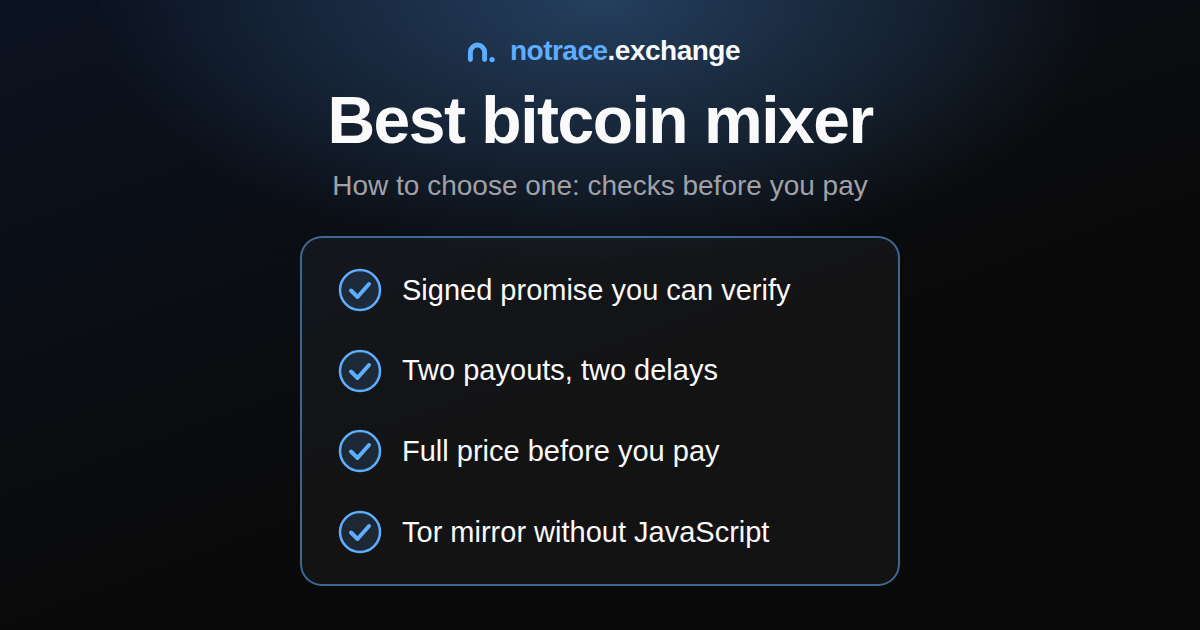
Best bitcoin mixer: how to choose one
September 14, 2026
How to choose the best bitcoin mixer: checks you can run on any service before you pay, from a signed promise to what it keeps about you.
Read more →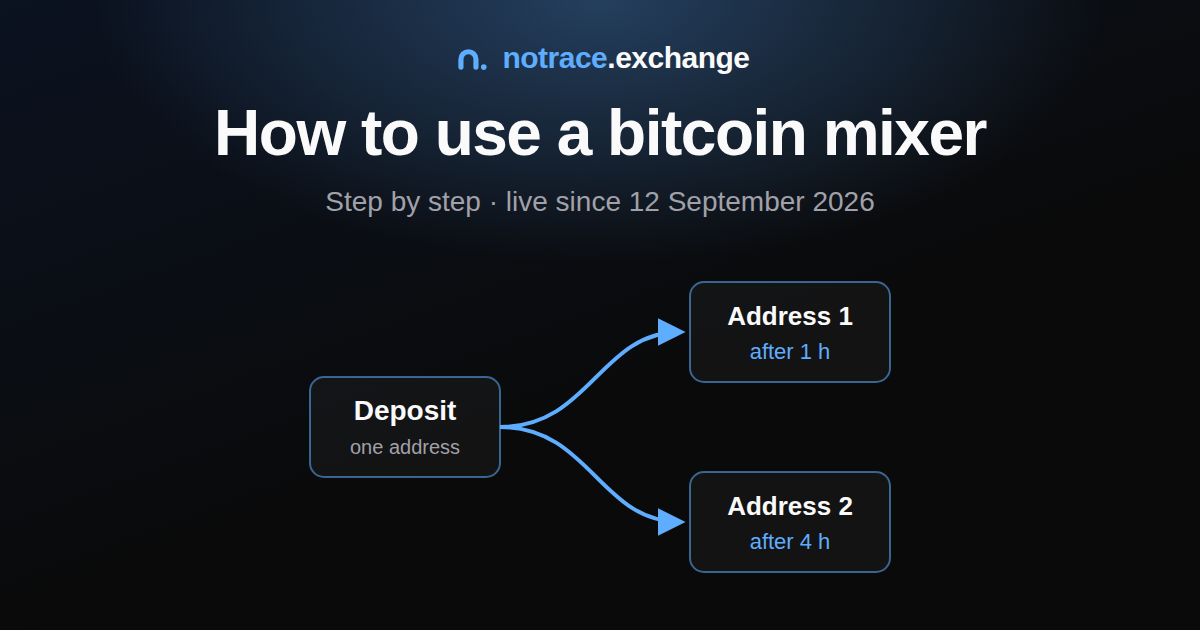
How to use a bitcoin mixer, step by step
September 13, 2026
How to use a bitcoin mixer, step by step, on notrace.exchange: live since 12 September 2026, with two payout addresses, a delay on each and a signed letter.
Read more →